The Complete Guide to Cooking Methods: Master Every Technique by Cuisine & Course
Master all cooking methods and techniques! A comprehensive guide covering dry heat, moist heat, and combination cooking techniques across various cuisines and courses. Perfect for home cooks.
Understanding Cooking Methods
Cooking methods are the fundamental techniques that transform raw ingredients into delicious, safe-to-eat meals. Every successful home cook and professional chef must master these essential cooking techniques to create diverse, flavorful dishes across all cuisines and courses.
The Science Behind Cooking Methods
Heat transfer is the foundation of all cooking methods. Understanding how heat moves through food helps you choose the right technique for optimal results:
- Conduction: Direct contact heating (pan-searing, grilling)
- Convection: Heat circulation through air or liquid (roasting, boiling)
- Radiation: Heat energy transfer (broiling, infrared grilling)
Dry Heat Cooking Methods
Dry heat cooking methods use air, fat, or metal to transfer heat without moisture. These techniques create caramelization and Maillard reactions, developing rich flavors and appealing textures.
1. Roasting
Roasting is a versatile dry heat method perfect for larger cuts of meat, whole poultry, and vegetables.
Best for:
- Prime rib, whole chicken, turkey
- Root vegetables, Brussels sprouts
- Temperature range: 325-450°F (163-232°C)
Key techniques:
- Preheat oven completely
- Use a roasting rack for air circulation
- For best results, let the meat rest before carving.
2. Baking
Baking differs from roasting primarily in application and temperature control.
Best for:
- Breads, pastries, casseroles
- Fish fillets, chicken breasts
- Temperature range: 300-375°F (149-191°C)
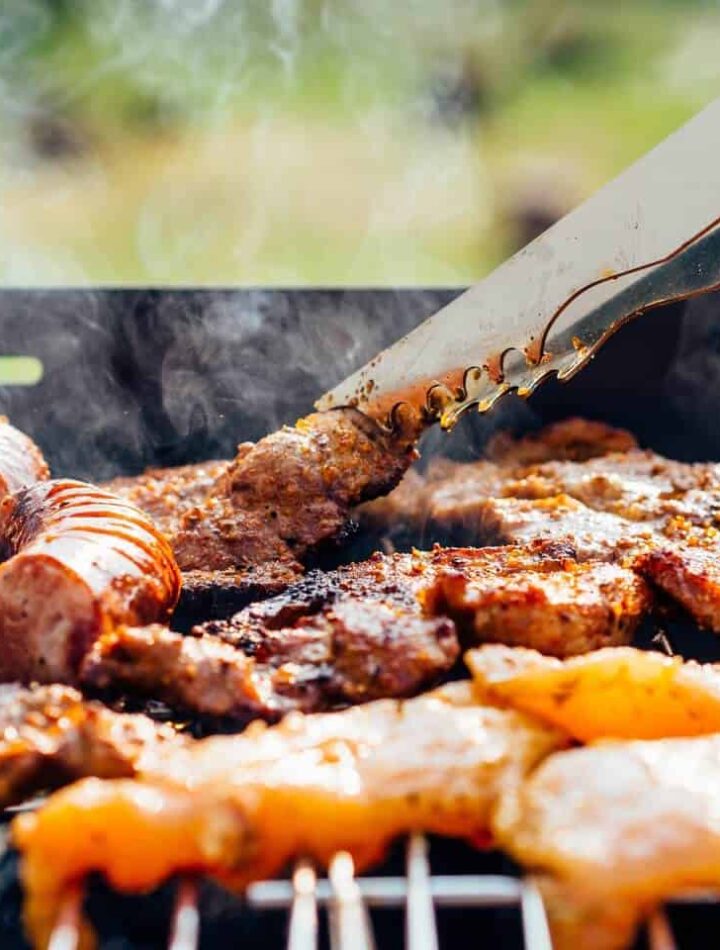
3. Grilling
It provides direct, high-heat cooking that creates distinctive char marks and smoky flavors.
Grilling techniques:
- Direct grilling: Food directly over a heat source
- Indirect grilling: Food positioned away from direct flames
- Temperature range: 400-600°F (204-316°C)
Best for:
- Steaks, burgers, chicken pieces
- Vegetables, seafood
- Summer entertaining
4. Broiling
Broiling uses intense heat from above to cook food quickly.
Best for:
- Thin cuts of meat
- Finishing dishes with browning
- Distance: 2-6 inches from heat source
5. Sautéing
Sautéing involves cooking food quickly in a small amount of fat over high heat.
Essential sautéing tips:
- Use a wide, shallow pan
- Keep food moving constantly
- Don’t overcrowd the pan
Best for:
- Vegetables, mushrooms
- Thin protein cuts
- Cooking time: 2-8 minutes
6. Pan-Frying
In comparison, pan-frying uses more oil than sautéing but less than deep-frying.
Best for:
- Chicken cutlets, fish fillets
- Pork chops, vegetables
- Oil depth: 1/4 to 1/2 inch
7. Deep-Frying
Deep-frying submerges food completely in hot oil.
Temperature control:
- Maintain 350-375°F (177-191°C)
- Use a thermometer for accuracy
- Don’t overcrowd fryer
Moist Heat Cooking Methods
Moist heat cooking methods use water, steam, or other liquids to transfer heat. These gentler techniques preserve nutrients and create tender results.
1. Boiling
Boiling cooks food in rapidly bubbling water at 212°F (100°C).
Best for:
- Pasta, rice, potatoes
- Hard vegetables
- Cooking liquid: Salted water
2. Simmering
In contrast, simmering uses gentler heat than boiling, with small bubbles breaking the surface.
Temperature: 185-200°F (85-93°C)
Best for:
- Soups, stews, sauces
- Delicate proteins
- Rice, grains
3. Poaching
Poaching cooks food gently in barely simmering liquid.
Temperature: 160-180°F (71-82°C)
Poaching liquids:
- Water with vinegar (eggs)
- Wine or broth (fish)
- Milk or cream (fruits)
Best for:
- Eggs, delicate fish
- Fruits, chicken breasts
4. Steaming
Steaming cooks food using hot vapor without direct water contact.
Benefits:
- Preserves nutrients and colors
- No added fats required
- Maintains natural flavors
Best for:
- Vegetables, seafood
- Dumplings, rice
- Health-conscious cooking
5. Blanching
As a cooking method, blanching briefly boils food and then quickly cools it in ice water.
Uses:
- Preparing vegetables for freezing
- Removing bitterness
- By partially cooking the food first, you can then finish it using other cooking methods.
Combination Cooking Methods
In general, combination cooking methods use both dry and moist heat techniques. First, the food is browned, and then liquid is added for slower cooking.
1. Braising
Braising combines searing and slow, moist cooking in a covered pot.
- Sear protein in hot fat
- Add vegetables (mirepoix)
- Add liquid (wine, broth)
- Cover and cook slowly
Best for:
- Tough cuts of meat
- Pot roasts, short ribs
- Cooking time: 2-4 hours
2. Stewing
Stewing is similar to braising but uses smaller, uniform pieces completely covered in liquid.
Best for:
- Beef stew, lamb curry
- Vegetable medleys
- One-pot meals
3. Sous Vide
Sous vide cooking vacuum-seals food and cooks it in precisely controlled water baths.
Benefits:
- Precise temperature control
- Consistent results
- Enhanced flavors
Equipment needed:
- Immersion circulator
- Vacuum sealer
- Food-safe bags
Cooking Methods by Cuisine
French Cuisine Techniques
French cooking methods emphasize technique, precision, and sauce mastery:
- Confit: Slow-cooking in fat
- En papillote: Cooking in parchment paper
- Flambé: Igniting alcohol for flavor
- Reduction: Concentrating flavors through evaporation
Asian Cooking Techniques
Asian cuisines feature unique high-heat and preservation methods:
- Stir-frying: High-heat, quick cooking
- Steaming: Preserving natural flavors
- Smoking: Adding depth and preservation
- Fermentation: Building umami flavors
Mediterranean Methods
Mediterranean cooking emphasizes olive oil and simple preparations:
- Grilling: High-heat, minimal seasoning
- Roasting: Slow, herb-infused cooking
- Braising: Wine-based slow cooking
- Raw preparations: Minimal cooking emphasis
Latin American Techniques
Latin American cuisines blend indigenous and European methods:
- Grilling (Asado): Open-fire cooking
- Steaming: Tamales and vegetables
- Frying: Empanadas and plantains
- Slow-roasting: Barbacoa methods
Cooking Techniques by Course
Appetizer Cooking Methods
Appetizer preparation requires quick, high-impact techniques:
- Pan-searing: Scallops, shrimp
- Frying: Crispy preparations
- Raw preparations: Tartares, ceviches
- Grilling: Vegetables, small proteins
Main Course Techniques
Entrée cooking demands versatility and precision:
Protein-focused methods:
- Roasting: Whole birds, large cuts
- Grilling: Steaks, chops, fish
- Braising: Tough cuts, one-pot meals
- Sautéing: Quick-cooking proteins
Vegetable accompaniments:
- Steaming: Preserving nutrients
- Roasting: Caramelizing sugars
- Grilling: Adding smokiness
Dessert Cooking Methods
Dessert preparation requires specialized techniques:
- Baking: Cakes, cookies, pastries
- Tempering: Chocolate work
- Caramelizing: Sugar work
- Freezing: Ice creams, sorbets
Sauce and Soup Methods
Sauce-making fundamental techniques:
- Reduction: Concentrating flavors
- Emulsification: Combining oil and water
- Thickening: Roux, cornstarch, reduction
- Simmering: Developing complex flavors
Advanced Cooking Methods
Molecular Gastronomy
Modern cooking techniques push culinary boundaries:
- Spherification: Liquid-filled spheres
- Gelification: Alternative textures
- Foams: Light, flavorful additions
- Liquid nitrogen: Instant freezing
Fermentation Methods
Fermentation adds complexity and preserves food:
- Lacto-fermentation: Vegetables, dairy
- Alcoholic fermentation: Wines, beers
- Koji fermentation: Asian flavor development
- Sourdough: Natural bread leavening
Smoking Techniques
Smoking methods add flavor and preserve:
- Hot smoking: 225-250°F cooking
- Cold smoking: Flavor without cooking
- Wood selection: Matching flavors to foods
- Temperature control: Consistent results
Essential Tips for Success
Temperature Control
Proper temperature management ensures consistent results:
- Invest in thermometers: Instant-read, probe, infrared
- Preheat properly: Allow adequate warm-up time
- Monitor continuously: Adjust as needed
- Rest proteins: Allow carryover cooking
Timing and Organization
Mise en place (everything in place) is crucial:
- Prep ingredients before cooking begins
- Plan cooking sequences for simultaneous finishing
- Use timers for multiple items
- Before special occasions, it is important to practice your techniques to ensure success.
Equipment Selection
Proper tools enhance cooking success:
- Heavy-bottomed pans: Even heat distribution
- Sharp knives: Efficient, safe preparation
- Quality thermometers: Accurate temperature readings
- Appropriate cookware: Method-specific tools
Flavor Development
Building flavors throughout the cooking process:
- Season in layers: Salt at multiple stages
- Brown proteins: Develop Maillard reactions
- Deglaze pans: Capture fond flavors
- Taste and adjust: Throughout the cooking process
Conclusion
Mastering cooking methods and techniques transforms home cooks into confident, creative chefs. Whether you’re grilling summer vegetables, braising winter stews, or baking fresh bread, understanding these fundamental approaches ensures consistent, delicious results.
Begin by mastering basic techniques, then gradually progress to combination techniques. Finally, incorporate methods specific to various cuisines. Practice regularly, maintain proper temperatures, and don’t fear experimentation. Each technique mastered opens new culinary possibilities and brings you closer to creating restaurant-quality meals at home.
Remember: great cooking isn’t about complex techniques—it’s about executing fundamental cooking methods with precision, patience, and passion. Master these essentials, and you’ll have the foundation to cook anything confidently across all cuisines and courses.